
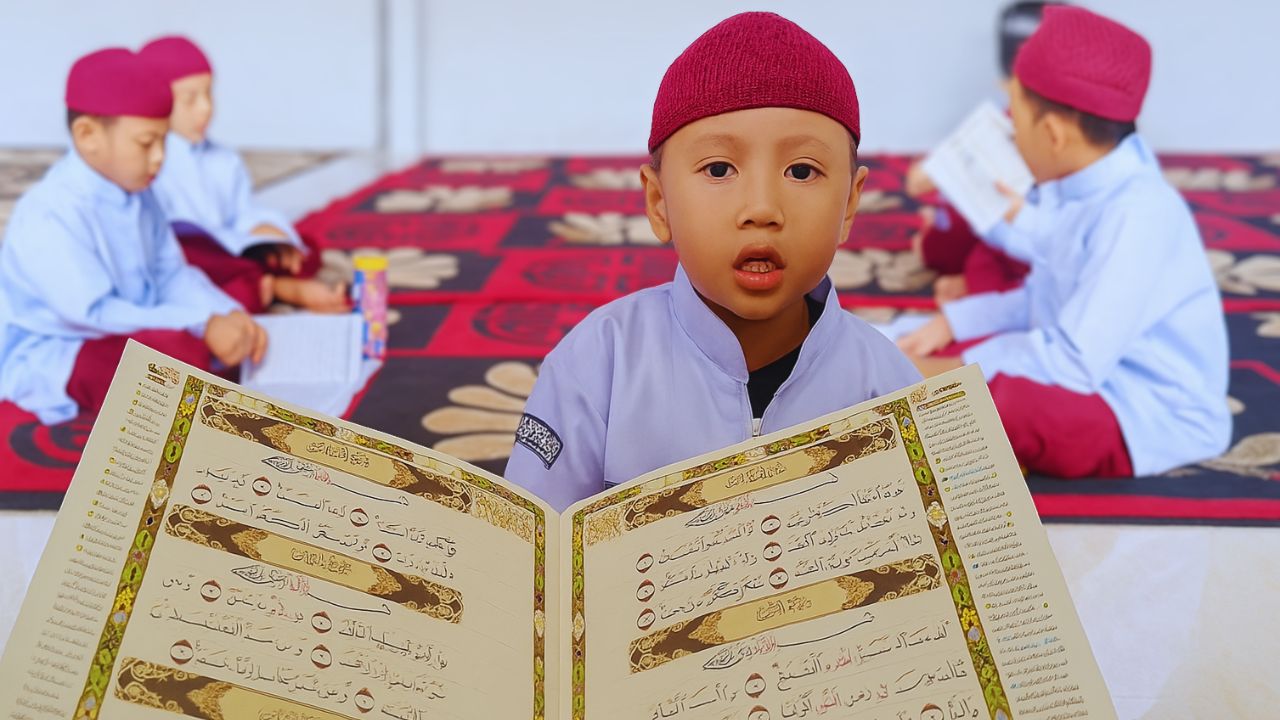
The Quran, the sacred scripture revealed by Allah ﷻ to the Prophet Muḥammad ﷺ, stands as a guide and a mercy for all humanity. This divine status is affirmed in numerous verses, including the opening of Surah Al-Baqarah:
ذَٰلِكَ ٱلْكِتَٰبُ لَا رَيْبَ ۛ فِيهِ ۛ هُدًى لِّلْمُتَّقِينَ
“This is the Book (the Quran), whereof there is no doubt, a guidanceto those who are Al-Muttaqūn [the pious believers of Islāmic Monotheism who fear Allāh much (abstain from all kinds of sins and evil deeds which He has forbidden) and love Allāh much (perform all kinds of good deeds which He has ordained)].”
(Surah Al-Baqarah: 2)
Beyond its role as a spiritual compass that shapes values and ethics, the Quran is a miracle. Its marvel lies not only in its guidance, laws, and morals but also in its unparalleled linguistic beauty and phonetic intricacy—a complex and fascinating phenomenon involving the very mechanics of human speech. A critical aspect of engaging with the Quran is tajwīd, the science that governs its proper recitation according to the precise manner transmitted from the Prophet ﷺ.
In the context of memorization (ḥifẓ), the role of tajwīd is crucial, though often underestimated. Memorizing the Quran is not merely the act of recalling a sequence of letters and words; it is a supreme form of devotion. This profound spiritual practice demands the presence of the heart, spiritual discipline, and a sincere intention to preserve the word of Allah within one's soul. It necessitates a harmony between the tongue, the heart, and one's intention. Without tajwīd, the act of memorization can become distorted, compromising both its meaning and its spiritual depth.
Tajwīd as the cornerstone of recitational authenticity
The term tajwīd derives from the Arabic root jawwada, meaning "to improve" or "to make excellent." Technically, it is the science of articulating each letter from its point of articulation (makhraj) while observing its required and conditional attributes. In this light, tajwīd is not an optional embellishment to the recitation of the Quran; it is an essential component of preserving the originality of the recitation as it was revealed to the Prophet ﷺ.
Allah ﷻ commands in Surah Al-Muzzammil:
وَرَتِّلِ الْقُرْآنَ تَرْتِيلًا
"And recite the Quran (aloud) in a slow (pleasant tone and) style”
(Surah Al-Muzzammil: 4)
In his exegesis, Imam Ibn Kathīr explains that tartīl (measured recitation) means to recite with tajwīd—clarifying the letters, observing the rules of recitation, and refraining from haste so that the meaning and beauty are rendered faithfully. This principle is a powerful foundation for the memorizer (ḥāfiẓ). A memorizer who neglects tajwīd is prone to phonetic errors that can corrupt the meaning, potentially diminishing the reward of their devotion.
The Prophet ﷺ highlighted the station of the proficient reciter, saying:
مَثَلُ الَّذِي يَقْرَأُ الْقُرْآنَ وَهْوَ حَافِظٌ لَهُ مَعَ السَّفَرَةِ الْكِرَامِ الْبَرَرَةِ، وَمَثَلُ الَّذِي يَقْرَأُ الْقُرْآنَ وَهْوَ يَتَعَاهَدُهُ وَهْوَ عَلَيْهِ شَدِيدٌ، فَلَهُ أَجْرَانِ
“Such a person as recites the Quran and masters it by heart, will be with the noble righteous scribes (in Heaven). And such a person exerts himself to learn the Qur'an by heart, and recites it with great difficulty, will have a double reward.”
(Sahih al-Bukhari: 4937)
Therefore, it is incumbent upon one who memorizes the Quran to constantly self-assess their recitation, both in terms of accuracy and retention. A crucial step is to seek a qualified teacher who can verify that one's recitation aligns with the method taught by the Prophet ﷺ to his companions, thereby attaining the noble virtues reserved for the bearers of the Quran.

The figure of a teacher to guide the reading of the Quran: Sekolah Tahfizh Makkah
For a memorizer, reciting without tajwīd is not merely a technical flaw; it can lead to a distortion of the verse's meaning. An incorrect vowel length (mad), a mispronounced letter, or an imprecise point of articulation can yield a completely different, even contradictory, interpretation. A simple example is the misreading of alima (عَلِمَ), meaning "he knew," as allama (عَلَّمَ), meaning "he taught"—a shift that fundamentally alters the meaning.
This is reinforced by the Prophet's ﷺ instruction:
اقرؤوا كما علمْتُم، فإنَّما أهْلَك من كان قبلَكم اختلافُهم على أنبيائِهم
"Recite (the Quran) as you have been taught, for indeed those before you were destroyed by their disagreements with their prophets.”
(Sahih al-Jāmi` lil Albānī: 1171)
The Prophet ﷺ taught that the Quran must not be recited arbitrarily but exactly as it was transmitted through an authentic chain of narration (sanad). This underscores the necessity of learning and applying tajwīd, without which one cannot recite the Quran as it was passed down from the Prophet ﷺ to his companions. This oral tradition, where the Prophet ﷺ recited the Quran perfectly to his companions, who then transmitted it to the next generation and so on, has preserved it in the exact form it was revealed.
Within the Islamic scholarly tradition, the sanad of Quranic recitation is a fundamental aspect of its preservation. Every authentic reciter and memorizer possesses a chain of transmission that connects directly back to the Prophet ﷺ. This sanad is not just a lineage; it is a guarantee that every link in the chain mastered the Quran with its tajwīd.
Imām al-Jazarī states in his renowned poem, the Muqaddimah al-Jazariyyah::
وَالأَخْذُ بِالتَّجْوِيدِ حَتْمٌ لازِمُ ... مَنْ لَمْ يُجَوِّدِ الْقُرَآنَ آثِمُ
"And applying tajwīd is a definitive obligation; whoever does not recite the Quran with tajwīd is sinful."
This statement highlights not only the legal obligation of tajwīd but also the gravity of its neglect during memorization, which constitutes a corruption of the sacred revealed text.
Consequently, a memorizer must first perfect their recitation before proceeding with memorization. This has profound implications, even in congregational prayer. Following an imam whose recitation contains major errors (laḥn jalī)—those that alter the meaning—can affect the validity of one's prayer. For instance, if an imam recites "an’amtu" (I have bestowed favor) instead of "an’amta" (You have bestowed favor) in Surah Al-Fatihah, the meaning is fundamentally changed. As a correct recitation of Al-Fatihah is a pillar of the prayer, scholars like Imam Ibn Qudāmah and Shaykh al-Uthaymīn hold that the prayer of such an imam is invalid, as is the prayer of a congregant who is aware of the mistake but continues to follow. The Prophet ﷺ stressed the importance of this chapter, stating:
'مَنْ صَلَّى صَلاَةً لَمْ يَقْرَأْ فِيهَا بِفَاتِحَةِ الْكِتَابِ فَهْىَ خِدَاجٌ' . يَقُولُهَا ثَلاَثًا بِمِثْلِ حَدِيثِهِمْ
"’He who said his prayer, but did not recite the opening chapter of al-Kitab (Al-Fatihah), his prayer is incomplete.' He repeated it thrice.”
(Sahih Muslim: 395)
However, if the imam's error does not alter the meaning—such as shortening a vowel that should be long or neglecting a nasalization (ghunnah)—the prayer remains valid, though it may be disliked (makrūh) to pray behind him. Scholars like Imam al-Nawawī, in his Al-Majmū’, explain that such errors do not invalidate the prayer because the core meaning is preserved. In circumstances where qualified teachers are scarce, an imam whose recitation of Al-Fātiḥah is correct may lead the prayer, even if he has other minor flaws or has only memorized short chapters. This aligns with Allah’s words:
فَاقْرَءُوا مَا تَيَسَّرَ مِنَ الْقُرْآنِ
"So, recite you of the Quran as much as may be easy for you.”
(Surah Al-Muzzammil: 20)
This verse indicates that when one's ability is limited, recitation according to that ability is permissible, provided the essential conditions for the validity of the prayer are met.
Memorizing the Quran is a deeper spiritual process than mere rote learning. Tajwīd enables the reciter to contemplate the verses calmly, clearly, and with reverence (khushū’). It slows the recitation, providing space to reflect, to be moved, and to comprehend the divine message. This aligns with the very purpose of the Quran's revelation, as Allah Ta’ālā states:
كِتَابٌ أَنْزَلْنَاهُ إِلَيْكَ مُبَارَكٌ لِّيَدَّبَّرُوا آيَاتِهِ وَلِيَتَذَكَّرَ أُولُو الْأَلْبَابِ
“(This is) a Book (the Quran) which We have sent down to you, full of blessings, that they may ponderover its Verses, and that men of understanding may remember.”
(Surah Sad: 29)
Tajwīd not only aids memorization but also unlocks the door to deep reflection (tadabbur). In the process of memorization, correct pronunciation leads to correct understanding, allowing the memorizer to not only retain the words mechanically but also to live by the spirit of the Quran. To recite the Quran fluently, with proper tajwīd, to reflect on its meanings, and to implement its teachings is a sign of true faith. Allah ﷻ states:
اَلَّذِيْنَ اٰتَيْنٰهُمُ الْكِتٰبَ يَتْلُوْنَهٗ حَقَّ تِلَاوَتِهٖۗ اُولٰۤىِٕكَ يُؤْمِنُوْنَ بِهٖۗ وَمَنْ يَّكْفُرْ بِهٖ فَاُولٰۤىِٕكَ هُمُ الْخٰسِرُوْنَࣖ
"Those (who embraced Islām from Banī Israel) to whom We gave the Book [the Taurāt (Torah)] [or those (Muḥammad’s ﷺ companions) to whom We have given the Book (the Quran)] recite it (i.e. obey its orders and follow its teachings) as it should be recited (i.e. followed), they are the ones who believe therein. And those who disbelieve in it (the Quran), those are they who are the losers.”
(Surah Al-Baqarah: 121)
Exegetes like Ibn ‘Abbās interpreted “recite it as it should be recited” (ḥaqqa tilāwatihi) as reciting it according to the rules of tajwīd and with a proper understanding of its meanings.
Unlike previous scriptures whose preservation was entrusted to their religious leaders, the Quran is distinguished by a divine guarantee of protection from Allah ﷻ Himself. He states definitively:
اِنَّا نَحۡنُ نَزَّلۡنَا الذِّكۡرَ وَاِنَّا لَهٗ لَحٰـفِظُوۡنَ
"Verily, We, it is We Who have sentdown the Dhikr (i.e. the Quran) and surely, We will guard it (from corruption).”
(Surah Al-Hijr: 9)
One of the manifest forms of this divine preservation is the continuity of its correct recitation, maintained through the science of tajwīd and the unbroken chains of transmission of its reciters.
Memorizing with tajwīd: a path to the eternality of god’s word
Tajwīd is an inseparable part of memorizing the Quran. Without it, the process of ḥifẓ not only loses its phonetic beauty and an essential auditory aid to memory but is also vulnerable to semantic distortion and theological error. Tajwīd is not merely a technical tool; it is a guardian of meaning, a preserver of the spirit of the revelation, and a gateway to profound reflection.
Memorizing the Quran is a sacred spiritual journey. It is not a mental routine but a unification of the heart, the tongue, and the soul in a singular resolve: to safeguard the words of Allah within one's being. Through tajwīd, our tongues are aligned with the recitation of the Angel Jibrīl and the Prophet Muḥammad ﷺ, connecting us to an unbroken chain of inheritors of the divine word. With tajwīd, our memorization is not only strong in our minds but also sound in the sight of Heaven.