
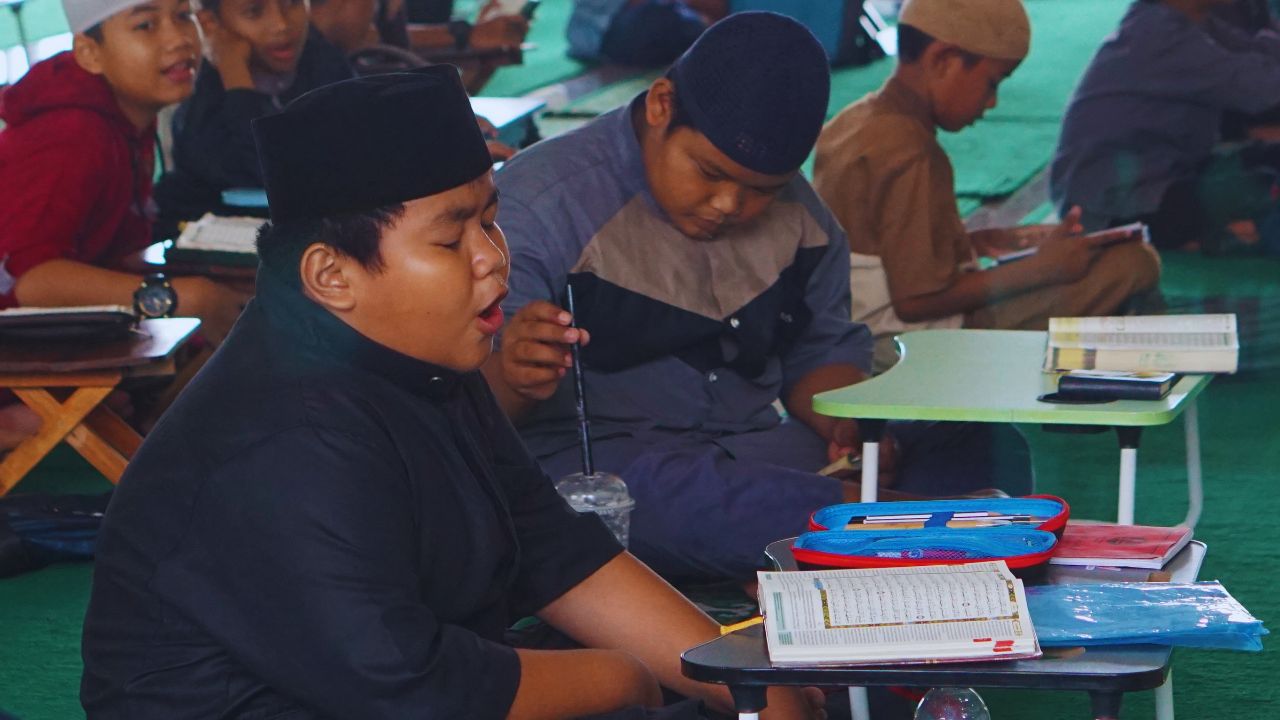
The Tahfizh Makkah School has established itself as a distinguished educational institution dedicated to nurturing a generation of proficient Quran memorizers. One of its hallmark programs is muroja'ah (revision), or the systematic repetition of memorized verses. This program is not merely a routine part of daily activities; it serves as the cornerstone for ensuring the retention and sustainability of students’ memorization efforts. The significance of muroja'ah lies in its strategic role in preventing the loss of memorized material through structured and consistent review.
To maximize the effectiveness of this program, the Tahfizh Makkah School has developed a comprehensive methodology that integrates technical, spiritual, and psychological approaches. This method ensures that Quranic memorization is not only retained in the students’ minds but also deeply embedded in their hearts. Consequently, the program aspires to produce students who excel in Quranic memorization and embody the Quran’s values as guiding principles in their daily lives.
A structured muroja'ah program
Recognizing the pivotal role of muroja'ah in Quran memorization, the Tahfizh Makkah School has meticulously designed a structured muroja'ah program. One of the key dedicated times for this activity is after the Asr prayer, a period when students' physical and mental states are optimized for reinforcing memorization and deepening comprehension.
From a physiological perspective, the Asr time marks a recovery phase following the day’s activities. Chronobiological studies, research into biological rhythms, suggest that during this time, cortisol levels (a stress-response hormone produced by the adrenal glands) begin to decline. This shift places the brain in a calmer state, ideal for repetition and introspection.
The uniqueness of this program lies in its peer-learning approach. Students engage in muroja'ah in pairs, and fostering an interactive and collaborative learning environment. In this method, students correct, share knowledge, and support each other, enhancing confidence and comprehension. Research on peer learning (Topping, 2005) has shown its effectiveness in promoting understanding and collaborative learning enthusiasm.
This muroja'ah program goes beyond academics, positively influencing students' spiritual and emotional development. Islam places great value on collective goodness, as illustrated by the words of Prophet Muhammad ﷺ:
" الْمُؤْمِنُ لِلْمُؤْمِنِ كَالْبُنْيَانِ يَشُدُّ بَعْضُهُ بَعْضًا ". وَشَبَّكَ بَيْنَ أَصَابِعِهِ.
"A believer to another believer is like a building whose different parts enforce each other." The Prophet (ﷺ) then clasped his hands with the fingers interlaced (while saying that).
(Sahih Bukhari: 481, 2446, 6026; Sahih Muslim: 2585; Tirmidhi: 928)
Through this activity, students learn to support and strengthen one another in fulfilling their sacred duty as guardians of the Quran, fostering genuine bonds of brotherhood.

Students of Tahfizh Makkah School engage in mutual revision of their memorized Quranic verses with their peers
From a psychological standpoint, the benefits of this program are profound. Research has shown that consistent repetition with a structured schedule enhances long-term memory retention. This process trains the brain to encode and integrate information effectively, making memorization both robust and profound (Karpicke & Roediger, 2008).
With its systematic approach, the Tahfizh Makkah School ensures that students not only memorize the Quran but also internalize its meanings. The ultimate goal of this program is to produce outstanding Quran memorizers who embody and practice the noble values of the Quran in their daily lives.
Daily and weekly muroja'ah assignments
For students who have memorized 15 juz or more, maintaining the quality of their memorization becomes a top priority. To support this, the Tahfizh Makkah School has implemented a structured and well-planned muroja'ah system comprising daily and weekly schedules.
a. Daily muroja'ah
Students are required to revise their memorized Quranic verses daily, covering a specific number of pages, sheets, or juz as determined by their respective halaqah (study circle) teachers. This activity is not merely a routine but a deliberate effort to ensure that their memorization remains strong and well-retained. Moreover, daily muroja'ah helps students refine their recitation, strengthen their application of tajweed (rules of Quranic pronunciation), and enhance their fluency in reading the Quran. This practice instills the importance of consistency while fostering an emotional and spiritual connection with the Quran.
Additionally, the daily muroja'ah assignment encourages parental involvement in their children's Quran memorization journey. This collaboration between school and home creates a harmonious learning process, benefiting both the student's progress and the family dynamic.
b. Weekly muroja'ah
Interestingly, rest days at Tahfizh Makkah School are not viewed as a complete break from Quranic engagement. On Fridays and Saturdays, students are still assigned muroja'ah tasks, encompassing a specified number of pages, sheets, or juz, as determined by their respective halaqah teachers. This program is designed to ensure students remain focused on their memorization even outside the formal classroom environment. The dedicated schedule during these days serves as a means to develop both mental and physical resilience while instilling a spirit of dedication in their relationship with the Quran.
The practice of muroja'ah, whether daily or weekly, extends beyond memorization. It plays a significant role in shaping the character of students. Through this routine, students learn to manage their time more effectively, maintain discipline, and build a strong sense of commitment to their responsibilities. This holistic approach reflects the deep integration of Quranic values into personal development.
The sambung ayat test
Memorizing the Quran is not merely about recalling verses; it is an intricate process that involves consistency, depth, and emotional connection with the Quran. To ensure students approach their muroja'ah with dedication, Tahfizh Makkah School employs the tes sambung ayat (verse continuation test) as a key evaluation method. This test serves as an effective tool to assess the retention of students' memorization while motivating them to be more diligent in revising.
In this test, students are given the initial portion of a verse and are required to continue reciting it without referring to the mushaf (physical Quran). This approach evaluates not only their memory but also their fluency and understanding of the structural flow of their memorized verses. Designed to test their ability to maintain focus and accuracy under evaluative conditions, the Verse Continuation Test is an essential component of their Quranic learning journey.
For students, this test fosters a sense of responsibility and presents a constructive challenge. Regular evaluations encourage discipline in their muroja'ah routines. Knowing that their performance will be reviewed by teachers and peers, students are motivated to maintain a high standard of memorization, creating an atmosphere of healthy competition that drives continuous improvement.
Furthermore, the test emphasizes the long-term nature of Quran memorization, teaching students that it is not a short-term achievement but a lifelong commitment. Through this method, students are encouraged to integrate their memorization into their daily lives, viewing it as a spiritual and personal journey rather than merely an academic goal.
For teachers, the Verse Continuation Test provides valuable insights into the individual needs of their students. Recurrent mistakes can highlight areas where a student might benefit from more intensive muroja'ah sessions or specialized repetition techniques. Meanwhile, students with strong retention can be challenged further with new memorization targets or deeper explorations of the meanings and translations of specific verses. This personalized approach ensures that each student receives guidance tailored to their unique potential.
At the institutional level, the test results serve as critical data points for evaluating the overall effectiveness of the muroja'ah program. Are the revision schedules optimal? Should the teaching methods be refined? By analyzing test outcomes, Tahfizh Makkah School can continuously enhance its Quranic curriculum, ensuring it remains aligned with the evolving needs of its students and the challenges of the modern era.

The student is participating in a sambung ayat test, which involves continuing a recitation from where a previous verse ends
The success of such programs is not measured solely by quantitative metrics, such as the number of verses memorized, but also by qualitative outcomes, including the development of character and a deep love for the Quran. Through methods like the sambung ayat test, systematic revision, and intensive teacher guidance, Tahfizh Makkah School has demonstrated the effectiveness of its approach in fostering strong, enduring memorization imbued with blessings.
The hope is that this program serves as a model for other tahfizh schools to develop comprehensive learning methods that align with Islamic values while addressing the demands of the modern age.