
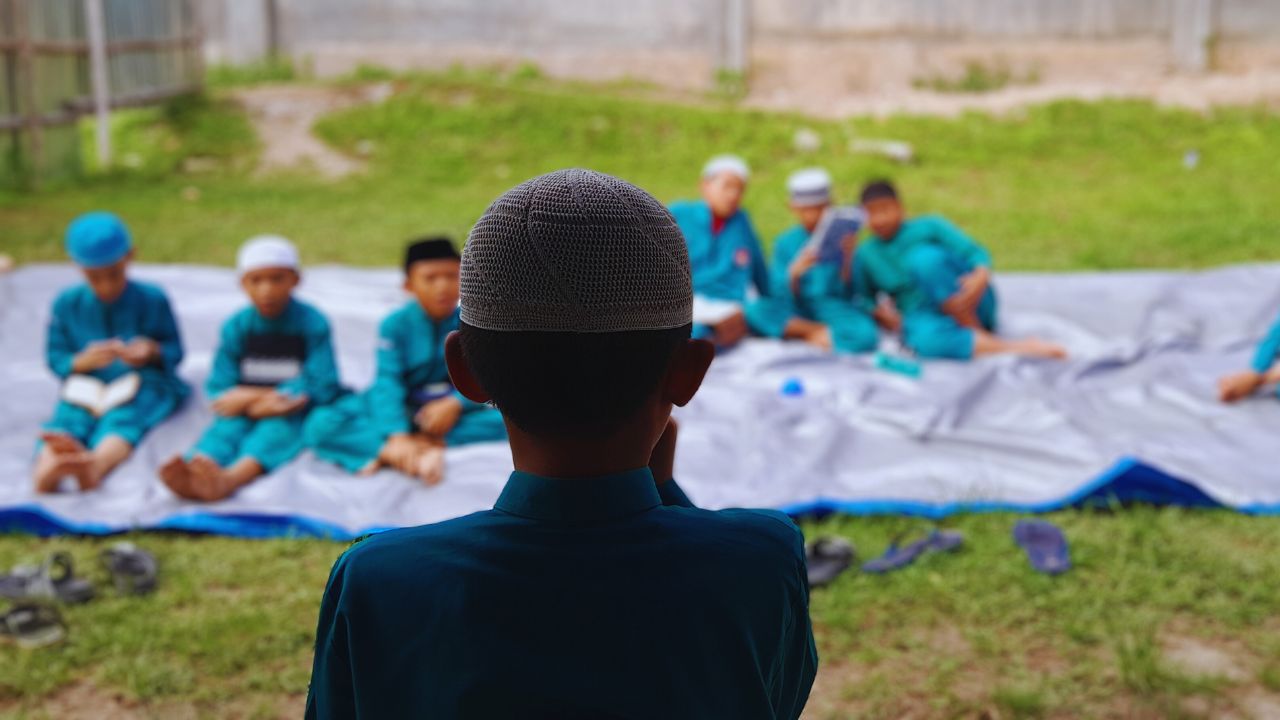
Educators in Quran memorization programs bear a dual responsibility: they must nurture new generations of hafiz (Quran memorizers) while also preparing them to serve in the cause of dawah (Islamic outreach). In Islam, certain tasks are communal obligations (fard kifayah); if some members of the community fulfill them, the burden is lifted from the rest. Dawah is understood to be such an obligation, not merely the exclusive duty of preachers. Thus every Muslim must do what he can in spreading the faith, but is not held to account for what is beyond his capacity.
Islamic scholars have long emphasized that duty corresponds to ability. As Shaykh al-Islām Ibn Taymiyyah (may Allah have mercy on him) stated in Majmu’ al-Fatāwā:
وَكُلُّ وَاحِدٍ مِنْ الْأُمَّةِ يَجِبُ عَلَيْهِ أَنْ يَقُومَ مِنْ الدَّعْوَةِ بِمَا يَقْدِرُعَلَيْهِ إذَا لَمْ يَقُمْ بِهِ غَيْرُهُ فَمَا قَامَ بِهِ غَيْرُهُ سَقَطَ عَنْهُ وَمَا عَجَزَ لَمْ يُطَالَبْ بِهِ وَأَمَّا مَا لَمْ يَقُمْ بِهِ غَيْرُهُ وَهُوَ قَادِرٌ عَلَيْهِ فَعَلَيْهِ أَنْ يَقُومَ بِهِ
“Every member of the Ummah must fulfill the obligation of dawah (inviting to Islam) to the extent of his ability. If others have already undertaken it, the obligation falls upon no one else. If a person is unable, he is not held accountable but if no one else does it while he is able, then it becomes his duty.”
(Majmu’ Al Fatawa, 15: 166)
This succinctly illustrates the principle: no one is excused from the call to Islam except by genuine incapacity. Ibn Taymiyyah further explained that communal duties are apportioned by capacity and knowledge:
وَأَمَّا مَا يَجِبُ عَلَى أَعْيَانِهِمْ فَهَذَا يَتَنَوَّعُ بِتَنَوُّعِ قَدْرِهِمْ وَمَعْرِفَتِهِمْ وَحَاجَتِهِمْ، وَمَا أُمِرَ بِهِ أَعْيَانُهُمْ فَلَا يَجِبُ عَلَى الْعَاجِزِ عَنْ سَمَاعِ بَعْضِ الْعِلْمِ أَوْ عَنْ فَهْمِ دَقِيقِهِ مَا يَجِبُ عَلَى الْقَادِرِ عَلَى ذَلِكَ وَيَجِبُ عَلَى مَنْ سَمِعَ النُّصُوصَ وَفَهِمَهَا مِنْ عِلْمِ التَّفْصِيلِ مَا لَا يَجِبُ عَلَى مَنْ لَمْ يَسْمَعْهَا وَيَجِبُ عَلَى الْمُفْتِي وَالْمُحَدِّثِ وَالْمُجَادِلِ مَا لَا يَجِبُ عَلَى مَنْ لَيْسَ كَذَلِكَ
“The obligations assigned to each person vary according to their capacity, knowledge, and needs. What is required of someone capable of understanding detailed points of religion is not required of one who cannot. Likewise, those who have heard and comprehended the texts carry a heavier burden than those who have not; similarly, jurists (mufti), scholars of hadith (muhaddith), and debaters (mujadil) bear responsibilities that ordinary people do not.”
(Majmu’ Al Fatawa, 3: 312)
In other words, a legal maxim in Islam holds that taklīf bi-l-qudrah (duty is measured by ability). Experts and scholars those “capable of understanding” are obliged to undertake more. Ordinary students are not held to the same level of duty that a learned mufti or preacher is.
Given this framework, it is vital for Quranic educators to impress upon their students that dawah is a noble trust (amānah), not an unbearable burden. Each Muslim must strive to “enjoin the right and forbid the wrong” to the best of his ability. Allah Himself praises this mission in the Quran: He says,
كُنْتُمْ خَيْرَ أُمَّةٍ أُخْرِجَتْ لِلنَّاسِ تَأْمُرُونَ بِالْمَعْرُوفِ وَتَنْهَوْنَ عَنِ الْمُنْكَرِ وَتُؤْمِنُونَ بِاللَّهِ
“You are the best nation produced [as an example] for mankind. You enjoin what is right and forbid what is wrong and believe in Allah.”
(Surah Aal-Imran: 110)
This verse of Quran reminds believers of their collective stature and responsibility. For teachers and mentors at Quran-memorization schools (tahfizh schools), it serves as a profound motivation: it is not enough to help students memorize the Quran; we must awaken in them the vision of being exemplars to society. A young hafiz who does not apply the Quran’s ethics to life has yet to fulfill his potential as an agent of change.
In practice, educators should continue reminding themselves and their students that the Prophet Muhammad ﷺ modeled dawah by living its values. Teaching is not only about conveying knowledge but about embodying it. We encourage students to see every act of kindness, every word of wisdom, as part of the prophetic path of guidance. Thus, as their verses accumulate, we pray that their sense of responsibility grows alongside: that each memorizer of the Quran becomes a role model, illuminating the message of Islam in word and deed.
Fostering unity as commanded by Allah and his messenger
Allah and His Messenger ﷺ emphatically command the unity of the Muslim community, viewing it as a fundamental pillar for a strong and blessed society. In the realm of Islamic education and especially in tahfizh schools fostering this unity is not merely a theoretical exhortation but a practical necessity. Such unity undergirds the educational process and the character formation of Quran memorizers, equipping them to serve the wider ummah effectively. Indeed, as the Prophet ﷺ taught, mutual support and cohesion are divine imperatives for believers.
In one profound parable the Prophet ﷺ illustrated the ideal relationship among the faithful:
المُؤْمِنُ لِلْمُؤْمِنِ كالْبُنْيانِ يَشُدُّ بَعْضُهُ بَعْضًا. وَشَبَّكَ بيْنَ أَصابِعِه
"A believer to another believer is like a building whose different parts enforce each other." The Prophet (ﷺ) then clasped his hands with the fingers interlaced (while saying that).”
(Sahih al-Bukhari: 2446)
this ḥadīth vividly conveys that each Muslim has a distinct and indispensable role. Just as a physical structure cannot stand without the proper integration of foundation, walls, pillars, and roof, so the Muslim community cannot stand firm unless its members strengthen one another in their diverse roles. In the context of a tahfizh school, for example, this means close collaboration between teachers, students, parents, and the surrounding community: each “brick” of the building contributes to the whole.
Ukhuwah Islāmīyah (Islamic brotherhood) therefore rests not simply on shared cultural or tribal identity but on shared faith and piety. It is manifested in mutual assistance, respect, and the fostering of good character (akhlaq). This principle is rooted in the Quran itself. In Surah al-Hujurat Allah ﷻ declares,
إِنَّمَا ٱلۡمُؤۡمِنُونَ إِخۡوَةࣱ فَأَصۡلِحُوا۟ بَیۡنَ أَخَوَیۡكُمۡۚ وَٱتَّقُوا۟ ٱللَّهَ لَعَلَّكُمۡ تُرۡحَمُونَ
“The believers are but brothers, so make settlement between your brothers. And fear Allah that you may receive mercy.”
(Surah Al-Hujurat: 10)
A recognition of human weakness underlies these teachings: no one is self-sufficient. A tahfizh teacher, for instance, cannot fulfill his mission in isolation. He needs administrators to handle logistics, caretakers to maintain facilities, donors to support financially, and fellow teachers to exchange pedagogical insights. Even basic daily needs involve collective effort. It is often noted that a single piece of bread on one’s table is the product of a vast network of labour from farmers who sow the grain to millers, bakers, transporters, and traders. Every step relies on others’ contributions. In the same way, the life of a Quran institute flourishes only through the synergy of many roles and talents, each held by different members of the community.
To affirm this interdependence, the Prophet ﷺ also reminded us of gratitude toward people, he said:
لاَ يَشْكُرُ اللَّهَ مَنْ لاَ يَشْكُرُ النَّاسَ
"He who does not thank the people is not thankful to Allah.”
(Sunan Abi Dawud: 4811)
This succinct hadith underscores that acknowledging others’ efforts is part of recognizing Allah’s blessings. When members of a community fail to appreciate one another, it breeds arrogance and a toxic attitude of “If it weren’t for me…” attitudes that corrode the fabric of brotherhood. In contrast, the true believer remembers that all good ultimately comes from Allah’s guidance (tawfiq) and mercy, which are manifested through human collaboration and kindness. Every assistance we receive is a means ordained by Allah, and gratitude to people is thus a reflection of gratitude to the Creator.

Collegial bond between students and teachers creates a supportive learning community
In the educational sphere of Quran memorization, these principles take on practical urgency. Teachers and administrators should model and instil values of unity and appreciation in their students. This can be done through personal example and through curricular emphasis on adab (etiquette and manners) in learning. By consistently nurturing an environment of mutual respect and collective responsibility, tahfizh schools produce not only strong memorizers of the Quran , but also individuals with robust character and a commitment to communal welfare.
Ultimately, realizing the unity that Allah the Exalted and His Messenger ﷺ have desired means recognizing each person’s place in the broader structure of the ummah, respecting and reinforcing one another, and subordinating personal ego for the sake of the collective good and the pleasure (rida) of Allah. This cooperative spirit must drive every endeavor in a tahfizh school. In doing so, the school becomes a microcosm of the united ummah envisioned in Islamic teaching firm in its faith, strong in its solidarity, and blessed by Allah.
The urgency of self-examination in righteous deeds
In the realm of education, especially within institutions devoted to Quran memorization, it is essential for every teacher to instill and embody the practice of muhasabah both before and after any action. Muhasabah, literally “self-evaluation” or introspection, is a voluntary exercise of the heart highly recommended in Islam. As Ibn al-Qayyim al-Jawziyyah (may Allah have mercy on him) explained, this practice divides naturally into two complementary phases: self-examination prior to undertaking a deed, and reflection upon it afterward.
1. Muhasabah before action
In Islamic tradition, muhasabah involves pausing to reflect whenever the urge to perform a deed arises and carefully considering whether the deed is appropriate. The classical scholar Al-Hasan al-Basri (may Allah have mercy on him) captured this principle well in a succinct aphorism:
رحم الله عبداً وقف عند همه، فإن كان لله مضى، وإن كان لغيره تأخر
"May Allah have mercy on a servant who pauses before his intention; if it is for Allah, he proceeds, but if it is for other than Him, he holds back.”
(Ighātsatul Lahfān fī Masāidisy Syaithān, 1:138, Dar ‘Ata’at al-‘Ilm edition)
This attitude of introspection is deeply relevant to the daily life of an educator, who often faces countless decisions in teaching, mentoring students, or managing school programs. Without muhasabah, a teacher may be driven by worldly motivations such as the pursuit of praise or recognition rather than a sincere aspiration for the pleasure of Allah, the Exalted.
In practice, applying muhasabah before action can be approached as a four-stage process:
First, one must honestly evaluate whether the intended deed can be carried out, both outwardly and inwardly. If it cannot be fulfilled, the idea should be abandoned. This realistic self-assessment is essential when planning educational initiatives or tahfizh programs.
The second stage is to decide whether the action should be undertaken or left undone. For example, a teacher should carefully consider whether assigning extra tasks is truly necessary, so as not to overwhelm students and undermine their enthusiasm for memorizing the Quran.
The third stage involves examining the purity of one’s intention. Is the act being performed solely for Allah’s sake, or is it motivated by personal gain or popularity? This consideration is especially critical in Quran education, where internal trials are frequent. Sincerity must be the foundation; actions lacking it can lead one toward hidden forms of shirk (idolatry), even if they appear successful outwardly.

Cultivating khushoo humble focus of heart and mind in salah functions as a psychological and spiritual mechanism for purifying intention and reinforcing conscious devotion
Finally, one must confirm that necessary support and resources are available. Just as the Prophet Muhammad ﷺ did not initiate jihad in Mecca without sufficient strength and supporters, educators should likewise avoid launching programs without securing adequate resources.
These four considerations are not merely spiritual disciplines; they form a strategic framework for educational leadership. By nurturing muhasabah in the classroom, teachers of Quran memorization can instill in their students a habit of thoughtful decision-making, cultivating a generation of huffaz (Quran memorizers) who are strong in their recall, pure in heart, and sharp in intellect. In an era increasingly defined by distraction and competition, the discipline of muhasabah remains an essential pillar for cultivating future scholars and leaders.
2. Muhasabah after action
Muhasabah after one’s actions is a form of self-monitoring and correction of the quality of worship, serving as a cornerstone in cultivating a character aligned with the Quran.
This self-examination after action can be divided into three main categories. The first is the muhasabah of acts of obedience: asking whether each act of worship has fulfilled the rights owed to Allah Ta’ala. These rights include six key aspects: sincerity (ikhlas) in performing the act; a pure intention (niyyah) directed solely toward Allah Ta’ala; adherence to the Prophet ﷺ’s sunnah; a consciousness of Allah’s watchful presence; the realization that the ability to act (tawfiq) is purely a gift from Him; and the honest acknowledgment of any shortcomings in the deed, even if it has been performed. A Quran memorization teacher should take these six aspects as benchmarks when teaching, evaluating, and assessing good deeds—both their own and those of their students.
A second category is the muhasabah of deeds that might be better left undone. This requires wisdom to discern actions that appear outwardly good but could cause harm, either by causing neglect of more essential duties or by fostering a sense of pride (ujub). A Quran instructor should impress upon students that not every outwardly “good” deed is truly praiseworthy if it distracts one from life’s ultimate purpose: seeking the pleasure of Allah Ta’ala by the noblest path.
The third category involves the muhasabah of ordinary, permissible (mubah) matters and daily habits. An educator needs to instill the awareness that a student’s time and activities must be purposefully directed. If mundane activities like eating, resting, or exercising are done with the intention of supporting worship and preserving one’s Quranic memorization, then those activities take on the value of worship. But if they are pursued purely for worldly pleasure, they lose their potential reward. In this regard, the Prophet ﷺ reminded us:
إنَّما الأعْمالُ بالنِّيّاتِ
“The reward of deeds depends upon the intentions.”
(Sahih al-Bukhari: 1)
In practice, a Quran educator should begin self-examination with the obligatory acts of worship prayer, fasting, and even the trust inherent in teaching itself. If deficiencies are found in these areas, one should correct one’s intention or adjust one’s performance. The educator should then scrutinize any personal sins, whether known or hidden, and hasten to repentance, as Allah the Exalted commands:
يَا أَيُّهَا الَّذِينَ آمَنُوا تُوبُوا إِلَى اللَّهِ تَوْبَةً نَّصُوحًا
“O you who have believed, repent to Allah with sincere repentance.”
(Surah At-Tahrim: 8)
It is also crucial to examine one’s physical actions: the tongue used in teaching or speaking, the hands used in writing or pointing, the ears used in listening, and the steps taken each day. Each should be weighed by questions like, “What is my intention? Is this action in accordance with the Shari’ah? Does it draw me closer to Allah?” No deed will escape accountability in the Hereafter, for Allah the Exalted warns:
وَلَا تَقۡفُ مَا لَیۡسَ لَكَ بِهِۦ عِلۡمٌۚ إِنَّ ٱلسَّمۡعَ وَٱلۡبَصَرَ وَٱلۡفُؤَادَ كُلُّ أُو۟لَـٰۤىِٕكَ كَانَ عَنۡهُ مَسۡـُٔولࣰا
“And do not pursue that of which you have no knowledge. Indeed, the hearing, the sight and the heart - about all those [one] will be questioned.”
(Surah Al-Israa: 36)
Allah likewise declares:
فَوَرَبِّكَ لَنَسْـَٔلَنَّهُمْ أَجْمَعِينَ (۹۲) عَمَّا كَانُوا يَعْمَلُونَ (۹٣)
"So by your Lord, We will surely question them all, About what they used to do.”
(Surah Al-Hijr: 92–93)
In summary, this approach to muhasabah should not remain a mere theory but a living practice for every Quran educator. When teachers hold themselves to account before and after every action, each deed whether teaching, policymaking, or spiritual mentoring carries greater weight in the sight of Allah and leaves a deeper impact on the students. As classical scholars (may Allah have mercy on them) have taught, the smallest acts performed with a sincere heart can become monumental in the Divine reckoning.