
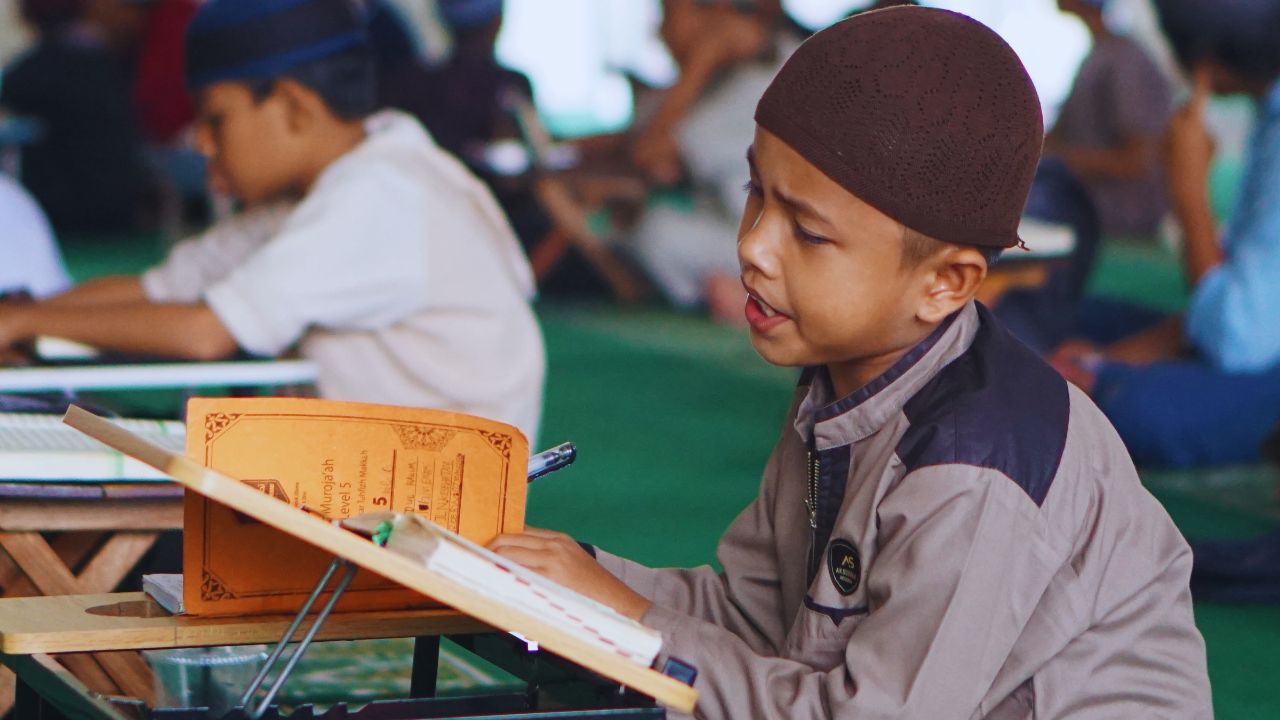
Memorizing the Quran is far more than an intellectual exercise; it is a profound act of worship reflecting one’s love for the Divine Word. In the context of Islamic education especially in tahfiz (Quranic memorization) schools this practice assumes a deeply spiritual dimension. It demands not only diligence, but also loyalty and sincerity in safeguarding the trust of Allah’s verses. Indeed, memorization cannot be equated with merely recalling ordinary text; it is a spiritual bond between a servant and the Lord.
In Islam, the discipline of memorization holds a central place as the very foundation of learning. Even in an age when books are widely available in print, the scholars of the past have emphasized the necessity of preserving knowledge in the heart. As Shaykh Muhammad ibn Salih al-Uthaymīn (may Allah have mercy on him) famously observed:
علم بلا حفظ يزول سريعا
"Knowledge without memorization will quickly disappear."
(Syarh Hilyat Thalib ‘Ilmi: 75)
This statement underscores the critical role of memorization in preserving knowledge. In the Islamic tradition, committing the Quran and other religious sciences to memory is not just a learning method, but also a means of safeguarding the wisdom that has been acquired.
Likewise, the 16th-century scholar Imam Abū ʿAbd Allāh Muḥammad ibn ʿAli ar-Rahbi (rahimahullah) affirmed the exalted status of the memorizer in a terse verse:
فاحفظ فكل حافظ إمام
"Memorize, for every memorizer is a leader."
(Matan Ar Rahbiyah: 5)
This concise aphorism portrays the hafiz (one who has memorized) as holding a high station both in scholarship and society. A memorizer is not merely seen as a passive recipient of knowledge, but as a model and a guide who inspires the community to preserve and practice the learning they have attained. In other words, those who commit the Quran to memory are entrusted with leadership by virtue of their devotion.
Yet in reality, memorizing the Quran is no easy endeavor. Many huffaz (memorizers), especially students in tahfiz schools, face serious challenges in maintaining what they have learned. This is where murajah (the regular, systematic review of one’s memorization) becomes indispensable. Murajah is an expression of loyalty to the memorized text. If memorization is a declaration of love, then murajah is the evidence of fidelity to that love. In other words, one’s love for the Quran must be continually nurtured through the loyalty of repetition and preservation of what has been memorized.
Ultimately, as educators in tahfiz institutions, we bear the responsibility not merely to teach memorization as an academic target, but to foster it as a way of life. Imparting the meaning of love and loyalty to the Quran to our students is a noble task that requires personal example, perseverance, and a deep understanding of the true nature of knowledge in Islam. For, as our illustrious predecessors envisioned, the goal of Islamic education is not simply to produce memorizers, but to raise guardians of the Quran who love it and remain faithful to it throughout their lives.
Memorization as an expression of love
Memorizing the Quran transcends mere intellectual exercise; for devout believers it embodies a profound love and longing for the Divine. Like a person enamored with another who cherishes every opportunity to know and be near the beloved, the hafiz strives to bind Allah’s words to his heart. This choice reflects a conscious devotion: a lover proves love not only in words but through sustained effort and sacrifice. As one scholar observes, those who memorize and live by the Quran are honored as “Allah’s own people” – as close to Him as one’s own family – because the act of preservation signals genuine attachment.
Such devotion demands real sacrifice of time, energy, and habit. Memorization is no simple academic feat or rote achievement; it requires waking before dawn, giving up leisure hours, and patiently reviewing verses through boredom and fatigue. A student of the Quran may forgo sleep or social free time to perfect each surah, not under compulsion but out of heartfelt commitment. This disciplined exertion (mujahadah) of the self demonstrates that the believer’s motive is pure love and reverence, not mere obligation. The willingness to persevere even when one’s memory falters shows that the heart is truly enamored with the Kalmullah (the Word of God).
In fact, the Prophet ﷺ expressly linked Quranic memorization with divine favor in this life and the next. He said:
إِنَّ لِلَّهِ أَهْلِينَ مِنَ النَّاسِ . قَالُوا يَا رَسُولَ اللَّهِ مَنْ هُمْ قَالَ هُمْ أَهْلُ الْقُرْآنِ أَهْلُ اللَّهِ وَخَاصَّتُهُ
“'Allah has His own people among mankind.'
They said: 'O Messenger of Allah, who are they?'
He said: 'The people of the Quran, the people of Allah and those who are closest to Him.'"
(Sunan Ibn Majah: 215)
This hadith (narrated by Anas bin Malik) honors the huffaz: those who tie Allah’s verses to their hearts become His “family,” uniquely close to their Creator. Likewise, the Prophet ﷺ promised exalted spiritual ranks for those who guard the Quran. He taught:
يُقَالُ لِصَاحِبِ الْقُرْآنِ اقْرَأْ وَارْتَقِ وَرَتِّلْ كَمَا كُنْتَ تُرَتِّلُ فِي الدُّنْيَا فَإِنَّ مَنْزِلَكَ عِنْدَ آخِرِ آيَةٍ تَقْرَؤُهَا
“One who was devoted to the Quran will be told to recite, ascend and recite carefully as he recited carefully when he was in the world, for he will reach his abode when he comes to the last verse he recites.”
(Sunan Abi Dawud: 1464)
In other words, each verse a believer memorizes and recites with contemplation will elevate him in Paradise. This hadith underlines that the ranking in the hereafter is literally tied to one’s Quranic commitment: “the more he recites (and rightly acts), the higher his status”.
Another well-known tradition underscores that this devotion brings honor even to one’s family:
مَنْ قَرَأَ الْقُرْآنَ وَعَمِلَ بِمَا فِيهِ أُلْبِسَ وَالِدَاهُ تَاجًا يَوْمَ الْقِيَامَةِ ضَوْؤُهُ أَحْسَنُ مِنْ ضَوْءِ الشَّمْسِ
“Whoever recites the Quran and acts according to its teachings – his parents will be crowned on the Day of Resurrection with a light brighter than the sun’s.”
(Sunan Abi Dawud: 1453)
This prophetic saying vividly illustrates the luminous reward tied to true Quranic dedication. However, scholars stress that such virtues apply only to those who truly guard the Quran and live by it. As noted above, simply uttering the words is not enough to earn the title “People of Allah” – one must also internalize its message and practice its guidance.
In sum, the pedagogy of tahfiz is founded on this notion of love. Teachers must convey that hifz (memorization) is not an academic chore but an act of intimate devotion to Allah. When students understand the spiritual privilege attached to memorizing the Divine Book, their commitment deepens. Love for the Quran will then take root as it is nourished by patience and consistency. Ultimately, memorization becomes the highest expression of affection for Allah’s word – a path that leads the believer to eternal dignity in both this life and the next.
Muroja’ah as evidence of devotional fidelity
In Islamic tradition, committing the Quran to memory is regarded as a profound act of love for the Divine. Yet even true love must be continually nurtured. Muroja’ah (regular review) is the disciplined practice of regularly revisiting one’s memorized Quran serves as tangible proof of a believer’s fidelity. Just as a genuine love requires constant attention, this review process ensures that the sacred trust (amanah) of the Divine Word remains alive in the heart and life of the Muslim. In this way, muroja’ah is both an intellectual and spiritual commitment to safeguard the great blessing of having Allah’s words embedded in one’s being.
Human memory is fragile and, if unattended, will fade. The Quran itself, despite its divine origin, is no exception. The Prophet ﷺ explicitly warned those who memorize the Quran not to neglect its review. He said:
استذكِروا القرآنَ؛ فلَهو أشدُّ تفِصِّيًا من صدورِ الرِّجالِ من النَّعَمِ من عُق
"So you must keep on reciting the Quran because it escapes from the hearts of men faster than camels do."
(Sahih al-Bukhari: 5032; Sahih Muslim: 790)
This vivid imagery underscores how easily the Quran can slip from one’s memory if not actively maintained. Even the Quran reminds us that
وَلَقَدۡ يَسَّرۡنَا الۡقُرۡاٰنَ لِلذِّكۡرِ
“And We have certainly made the Quran easy for remembrance”
(Surah Al Qamar: 17),
implying that while its retention has been made accessible, it nonetheless requires our diligence. In short, muroja’ah is far more than a rote routine; it is an indispensable duty that keeps the Divine revelation ever present in a Muslim’s consciousness.
Each session of muroja’ah is also an act of spiritual renewal. Every repeated recitation is like watering a seed of love in the heart, deepening familiarity and insight into the Quran’s sacred meanings. This continuous engagement mirrors any strong relationship: sustained remembrance and dialogue naturally strengthen emotional bonds. Modern cognitive science concurs: spaced repetition dramatically boosts memory retention and understanding. In practice, then, each round of review revives the believer’s connection to Allah’s words, making the Quran ever more intimate and alive in one’s consciousness.
Muroja’ah also functions as a rigorous form of self-audit. By revisiting memorized passages, the learner corrects errors, reinforces weaker sections, and probes subtler interpretations. This process is more than mechanical repetition; it is muhasabah (a form of spiritual introspection) that purifies the soul, refines character, and solidifies conviction. In traditional tahfiz education, teachers emphasize that muroja’ah is part of the proper adab (etiquette) of a Quran memorizer – a sacred trust to be honored and a grateful response to the blessing of memorization. Indeed, regular review is not empty ritual but transformative practice. Educators note that such consistent revision “instills the importance of consistency while fostering an emotional and spiritual connection with the Quran”. The promise of divine reward reinforces its importance: one scholar explains that the status of a hafiz in the Hereafter is “commensurate with the last verse he memorized”. In this light, muroja’ah is not only the mark of a faithful servant but a bridge to elevated ranks in God’s sight.

Committing the Quran to memory is one of the deepest expressions of love for God
Ultimately, a believer’s loyalty to the Quran is measured not merely by how many verses he has learned, but by how steadfastly he preserves them. A true guardian of the Divine message continually returns to its verses reciting them, reflecting on them, and living by them. For the devoted learner, muroja’ah becomes not a burdensome chore but an act of worship suffused with love and beauty. Through this cycle of recitation and reflection, the Quran remains a living, guiding presence in the heart. In such steadfast stewardship, the faithful demonstrate enduring devotion proof that the flame of their love for the Divine Word continues to burn brightly.
The trials of Quranic memorization and review
Memorizing the Quran (hifz al-Quran) is widely acknowledged as a noble and deeply rewarding pursuit. Yet even the most earnest and disciplined aspirants encounter formidable obstacles along this path. Disruptions as simple as a sudden distracting thought or the fatigue of mind and body can interrupt the memorization process. In an age of ubiquitous media, students of the Quran now must also contend with “abundant distractions” from smartphones and social media, which can easily derail one’s focus. As one commentator observes, where once a hafiz might struggle only against solitude and silence, today the challenge includes overcoming “digital devices” and a host of daily interruptions
A common difficulty lies in the instability of one’s inner state. Even a mature memorization can fade if muroja’ah lapses for as little as a day. Students often find that, despite having some spare time, competing priorities force them to postpone their muroja’ah sessions. In a study of tahfiz students, researchers identified key barriers: time constraints, an “inability to remember verses,” and external noise or distractions that make recitation difficult. In practice, this means that a learner might lose ground simply by neglecting the disciplined regimen of muroja’ah. Worldly temptations compound the problem: laziness, the lure of entertainment, or even a premature feeling of accomplishment can sap motivation. One modern guide to Quranic memorization bluntly notes that distractions are plentiful and must be actively managed.
In confronting these challenges, Islamic tradition emphasizes the primacy of sincere intent. As the Prophet ﷺ famously taught:
إِنَّمَا الأَعْمَالُ بِالنِّيَّاتِ
“Verily, actions are judged by intentions; and each person will have only what he intended.”
(Sahih Muslim: 1907)
Likewise, ʿAbdullāh ibn ʿAbbas is reported to have said:
إنما يحفظ الرجل على قدر نيته
“A man only preserves [his Quran] according to the strength of his intention.”
(Jami’ li Akhlaq Rawi wa Adab Sami’, 2:257)
In other words, the depth and sincerity of one’s niyyah (intention) undergird the entire endeavor. A commitment to memorization as an act of worship – rather than as a worldly task – grants the spiritual resolve needed to persevere. This resolve, in turn, is nurtured by sabr (patience) as one presses on through each demanding day. The Quran itself offers consolation and encouragement to the persevering memorizer. Allah declares:
وَالَّذِينَ جَاهَدُوا فِينَا لَنَهْدِيَنَّهُمْ سُبُلَنَا
“And those who strive for Us - We will surely guide them to Our ways.”
(Surah Al-‘Ankabūt: 69)
Such verses inspire hope for every student of the Book. Indeed, Allah further assures:
الَّذِينَ آمَنُوا۟ وَتَطْمَئِنُّ قُلُوبُهُم بِذِكْرِ اللَّهِۚ أَلَا بِذِكْرِ اللَّهِ تَطْمَئِنُّ الْقُلُوبُ
“Those who have believed and whose hearts are assured by the remembrance of Allah. Unquestionably, by the remembrance of Allah hearts are assured.”
(Surah Ar-Ra’d: 28)
In this spirit, one reflects that every letter of the Quran, when revisited in prayer and study, brings about Allah’s blessings quieting the heart, clarifying the mind, and reinforcing the believer’s faith.

Teachers must remain steadfast in guiding their students along the sacred path of memorizing the Quran
Given these realities, teachers and mentors of tahfiz must do more than simply command rote repetition. They should cultivate in students a tawaduʿ (humility) and sincerity of intent (ikhlas), and instill firm discipline in their schedules. One contemporary educator notes that “cultivating consistency is equally important”, adding that memory “needs constant revision” and urging students to “be patient, persevere, and let the seeds of your effort grow into… divine wisdom”. In practice this means setting a stable timetable for review, regularly revisiting past surahs, and maintaining the humble intention that every moment spent on the Quran is a chance for spiritual refinement.
The journey of hifz is undeniably long and demanding – far more akin to an endurance marathon than a sprint – but it is also laden with mercy. Tradition holds that the hafiz, despite the rigors he faces, walks a path of immense blessing. As he struggles to preserve the Divine word, Allah promises to uplift his rank, both in this world and in the Hereafter. For the sincere believer, therefore, each challenge surmounted is itself a victory, testifying that the effort to keep the Quran in the heart is always underwritten by His guidance and grace.
Memorization and revision: insights from the Salaf
The practice of memorizing the Quran and preserving that memory through muroja’ah has deep roots in Islamic scholarship. From the time of the Prophet’s Companions and the pious predecessors (al-salaf al-salih), hifz of the Quran has been regarded as a supreme act of worship and a hallmark of true learning and piety. They spoke of memorization as the “light of life” and treated revision as the breath of every day. In their tradition, Quranic memorization was more than a verbal skill; it represented a profound spiritual bond with the Divine Word.
Among the Companions, Abdullah bin Mas‘ud (may Allah be pleased with him) set a notable example. He urged the community to reinforce their knowledge continuously:
تَذَاكَرُوا الْحَدِيثَ، فَإِنَّ حَيَاتَهُ الْمُذَاكَرَةُ
“Review the teachings [hadiths] together, for indeed the life of knowledge lies in its review.”
(Madkhal ilā Sunan al-Kubrā: 288)
This maxim highlights that knowledge – including one’s Quran memorization – truly lives and endures only through regular review and scholarly discussion. Without such continual reinforcement, even the most precious knowledge can fade away.
The generation after the Companions also stressed this principle with vivid metaphors. The scholar al-A‘mash warned:
احْفَظُوا مَا جَمَعْتُمْ، فَإِنَّ الَّذِي يَجْمَعُ وَلَا يَحْفَظُ كَالرَّجُلِ كَانَ جَالِسًا عَلَى خِوَانٍ، يَأْخُذُ لُقْمَةً لُقْمَةً، فَيُنْبِذُهَا وَرَاءَ ظَهْرِهِ، فَمَتَى تَرَاهُ يَشْبَعُ؟
“Preserve what you have gathered, for the one who collects knowledge but does not preserve it is like a man sitting at a table who takes bite after bite, then casts each one behind his back. When will he ever be satiated?”
(al-Khaṭīb al-Baghdādī, al-Jāmi‘ li Akhlāq ar-Rāwī, 2/248)
This striking image shows the futility of acquiring knowledge without muroja’ah. Knowledge not guarded by review slips away and bears no lasting benefit. In a similar vein, Abdurrahman bin Mahdi tersely stated:
الْحِفْظُ هُوَ الْإِتْقَانُ
“Memorization is mastery.”
(Kitab al-Kifayah fi ‘Ilm ar-Riwayah li al-Khatib al-Baghdadi: 165)
His point was clear: the emphasis must be on quality of memorization rather than mere quantity. It is not how many verses one knows, but how accurately, deeply and understandly one holds them in the heart.
Later scholars reinforced this. Shaykh Bakr ibn ‘Abdillāh Abū Zayd famously advised his students:
تَعَاهَدْ عِلْمَكَ مِنْ وَقْتٍ لِآخَرَ، فَإِنَّ عَدَمَ التَّعَاهُدِ عُنْوَانُ الذَّهَابِ لِلْعِلْمِ مَهْمَا كَانَ
“Maintain your knowledge from time to time, for neglect of it is a sure sign of its disappearance, no matter how abundant it was.”
(Hilyah Talib ‘Ilm: 177)
His words strengthen the lesson: Quranic memorization, like any other science, will not endure without ongoing care. And that care is precisely what muroja’ah provides.
What the Salaf demonstrated was that memorization and review were lifelong practices, not mere seasonal efforts. Their earnest discipline in safeguarding the Word of God is an inspiring legacy for modern teachers and learners. They did not wait for a “free day” to review; they made time for it out of profound love for the Quran. In this way they taught that true mastery comes through steady, heartfelt engagement with the text.
By emulating the spirit of the Salaf, today’s Quran memorizers can find a firm and sincere motivation to preserve their closeness to the sacred text. Ultimately, the goal is not simply the volume of verses memorized, but how consistently they are safeguarded and enlivened in daily life. As the earlier adage reminds us, excellence in memorization is defined by thoroughness and understanding. A student who continually reviews and reflects on the words will benefit far more than one who merely accumulates words on an empty heart.
Memorizing the Quran and maintaining it through review is not just an academic or ritual exercise. It is a spiritual journey, a form of worship that demands the whole presence of the heart, pure intention, and unbroken devotion. Along this journey the learner cultivates noble virtues, including: ikhlas, sabr, and mujahadah. These qualities become character traits in the soul of one who loves the Quran. Through recitation and review, the memorizer undergoes a transformation that goes beyond the intellectual to shape moral and spiritual excellence.
Just as true love requires sacrifice and loyalty, so does love for the Quran. Memorization is a declaration of love to the Divine Word, and muroja’ah is the proof of that loyalty. Together they form the foundation of a close relationship between the servant and his Lord, a bond nourished by constant attention and affection for what Allah has revealed.
The path of hifz is indeed full of challenges, both internal and external. Yet Allah ﷻ promises great reward to those who tread it. The Prophet ﷺ said:
خَيْرُكُمْ مَنْ تَعَلَّمَ الْقُرْآنَ وَعَلَّمَهُ
“The best among you are those who learn the Quran and teach it.”
(Sahih al-Bukhari: 5027)
This profound hadith is a powerful reminder that anyone on this path – whether as student or teacher – is pursuing a noble and honored endeavor. Every verse memorized, every letter reviewed, every moment spent in muroja’ah is a deed beloved and approved by Allah ﷻ.
Ultimately, memorization and review are not ends in themselves but bridges drawing us closer to the Quran and helping us live by its guidance. With patience continually nurtured, love constantly renewed, and intentions purified for Allah alone, may we all be counted among the people of the Quran whom He honors in this world and in the Hereafter.