
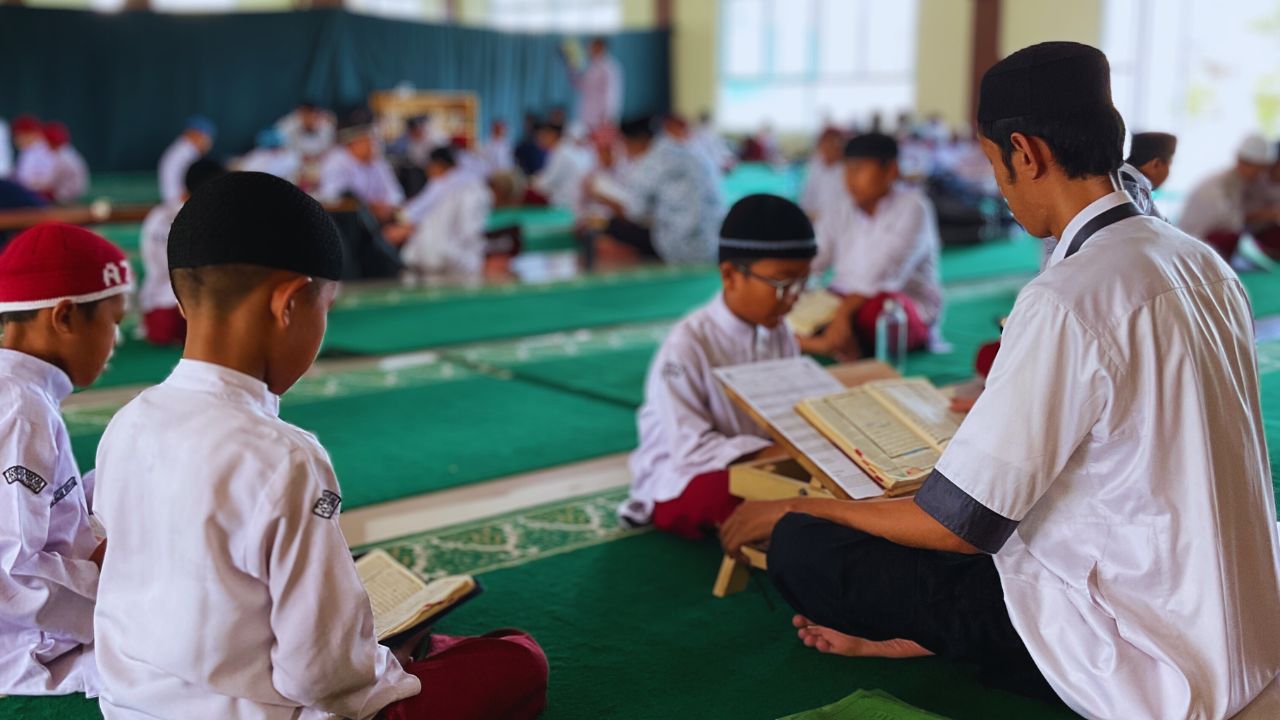
In the field of education, particularly within Quranic memorization schools, orderliness and discipline stand as two foundational pillars that cannot be overlooked. Orderliness plays a crucial role in creating a structured learning environment, where every activity is guided by clear schedules and rules. Discipline, on the other hand, fosters consistency in efforts toward achieving goals, such as memorizing the Quran. Together, they complement each other to ensure that every student develops optimally.
Allah states in the Quran:
وَٱلَّذِينَ جَـٰهَدُوا۟ فِينَا لَنَهْدِيَنَّهُمْ سُبُلَنَا
“And those who strive for Us—We will surely guide them to Our ways.”
(QS. Al-Ankabut: 69)
This verse emphasizes the importance of consistent effort in achieving success, including embedding orderliness and discipline within the educational process.
A well-ordered environment facilitates uninterrupted learning and creates a comfortable, productive atmosphere. In the context of a halaqah (study circle), orderliness means that each participant understands their roles and responsibilities and adheres to agreed-upon rules. Imam Ash-Shafi’i eloquently underscored the centrality of knowledge, saying:
مَنْ أَرَادَ الدُّنْيَا فَعَلَيْهِ باِلعِلْمِ وَمَنْ أَرَادَ الآخِرَةَ فَعَلَيْهِ باِلعِلْمِ وَمَنْ أَرَادَهُمَا فَعَلَيْهِ باِلعِلْمِ
"Whoever desires the world must have knowledge; whoever desires the Hereafter must have knowledge; and whoever desires both must have knowledge."
(Manaqib Ash-Shafi’i, 2:139)
This statement highlights that the pursuit of knowledge is unlikely to succeed without a well-organized and disciplined learning environment.
However, implementing orderliness and discipline is not without its challenges. A halaqah often comprises students with diverse personalities and abilities, requiring a flexible and wise approach. Educators must understand each student’s character and capabilities to instill these values effectively.
In this context, Ibn Qayyim Al-Jawziyyah’s words in his book Tuhfat al-Mawdud fi Ahkam al-Mawlud are profoundly relevant:
"Effective education is that which guides students according to their talents and interests, without neglecting noble character."
This perspective underscores that a balance of structured learning and individualized guidance is essential for achieving the best outcomes in any educational setting, especially in nurturing the next generation of Quranic scholars.
Strategi membentuk halaqah yang kondusif
1. Selecting the optimal halaqah setting
The learning environment plays a critical role in supporting the concentration and productivity of students, particularly in Quran memorization schools. A clean, comfortable, and distraction-free space can significantly enhance students' focus on memorizing and understanding the Quranic verses. Conversely, a noisy or poorly organized environment can hinder concentration and reduce students' ability to retain information.
Research by Al-Harbi (2021) demonstrated that a conducive learning atmosphere can improve Quran memorization retention by up to 25%. This finding underscores the importance of an appropriate learning environment in supporting students’ ability to absorb and recall the Quranic material.
In the context of a halaqah within a tahfizh school, the spatial arrangement between the teacher and students is equally significant. Ibn Jama'ah, in his book Tadzkirah as-Sami’ wa al-Mutakallim, elaborates on the proper etiquette and positioning in educational gatherings:
أن يجلس (المدرس) بارزًا لجميع الحاضرين ويوقر أفاضلهم بالعلم والسن والصلاح والشرف ويرفعهم على حسب تقديمهم في الإمامة ويتلطف بالباقين ويكرمهم بحسن السلام وطلاقة الوجه ومزيد الاحترام
"A teacher should sit in a position visible to all attendees to maximize their benefit. He should honor the most distinguished among them in terms of knowledge, age, piety, and status, granting them elevated positions based on their precedence, similar to the order in selecting an imam for prayer. The teacher should also be gentle with the other attendees, greeting them warmly, displaying a cheerful demeanor, and showing additional respect to maintain the dignity and harmony of the assembly."
(Tadzkirah as-Sami’ wa al-Mutakallim: 33)
This principle is particularly relevant in tahfiz education, where an atmosphere of respect and scholarship forms the foundation of effective learning. By adhering to these guidelines, interactions within the halaqah not only enhance the effectiveness of teaching but also instill essential adab (etiquette) and ethics in seeking knowledge.
As an example of implementing these values, Tahfizh Makkah School has adopted a U-shaped halaqah arrangement to maximize learning effectiveness. This setup allows the teacher to be the focal point, facilitates interaction with all students, and fosters a structured and harmonious environment. This approach not only supports the educational process but also embodies Islamic values of respect, discipline, and a profound love for knowledge within the halaqah setting.

The seating arrangement of the teacher and students influences the effectiveness of the learning process
2. The role of muqaddimah
The muqaddimah (introduction) plays a pivotal role in setting the tone for effective learning, particularly in structured sessions like halaqahs. This opening phase prepares the mental and emotional state of students, ensuring they are ready to engage with the lesson. During this stage, educators can create a positive atmosphere by sharing brief motivational messages, inspiring anecdotes from the lives of the Sahabah, or relevant pieces of advice. These strategies help students enter the session with heightened focus and enthusiasm.
A practice rooted in the Sunnah of the Salaf is exemplified by Jabir (may Allah be pleased with him), who narrated:
كَانَ رَسُولُ اللَّهِ صلى الله عليه وسلم يَخْطُبُ النَّاسَ يَحْمَدُ اللَّهَ وَيُثْنِي عَلَيْهِ بِمَا هُوَ أَهْلُهُ ثُمَّ يَقُولُ " مَنْ يَهْدِهِ اللَّهُ فَلاَ مُضِلَّ لَهُ وَمَنْ يُضْلِلْ فَلاَ هَادِيَ لَهُ وَخَيْرُ الْحَدِيثِ كِتَابُ اللَّهِ " .
the Messenger of Allah ﷺ, while delivering the sermon' to the people, praised Allah, and lauded Him for what He deserves, and would then say:
"He whom Allah guides aright, there is none to mislead him, and he who is led astray, there is none to guide him (aright), and the best of the talk is embodied in the Book of Allah. And the rest of the hadith is the same."
(Sahih Muslim: 867)
This hadith highlights how the Prophet Muhammad ﷺ began his gatherings by praising Allah and offering succinct, meaningful counsel. This approach not only established a spiritual and emotional connection with the audience but also redirected their attention to the importance of Allah's guidance and the Quran as the ultimate source of knowledge.
Research by Rahman (2019) supports the value of effective introductions, revealing that motivational openings in learning sessions can increase student engagement by up to 30%. This finding reinforces the view that an inspiring muqaddimah not only energizes students but also enhances their focus and concentration throughout the lesson.
Incorporating inspirational stories from the early generations of Islam, such as the Sahabah, is another proven method of fostering a love for learning. For instance, the story of Abdullah ibn Mas'ud (may Allah be pleased with him) is a powerful example. Despite his humble origins and limited means, he demonstrated extraordinary determination in memorizing the Quran. Such narratives resonate deeply with students, offering tangible examples of how the early generations valued knowledge and the Quran above all else.
3. Fostering care and attention in education
A teacher's genuine care for their students' development is a key factor in fostering optimal engagement during the learning process. Teachers who are attentive to the needs of their students can create a supportive environment, both academically and emotionally. Imam Ibn Jama’ah, in his book Tadzkirah as-Sami’ wa al-Mutakallim, emphasizes that caring for students is a significant responsibility of educators. He reminds us that the role of a teacher extends beyond merely imparting knowledge; it also includes monitoring, guiding, and nurturing students throughout their educational journey so that they grow into knowledgeable individuals with noble character.
A teacher's sincere concern has a profound impact. It not only boosts students' confidence but also strengthens the emotional bond between teacher and student. This connection is beautifully illustrated in the words of the Prophet Muhammad ﷺ:
" إِنَّمَا أَنَا لَكُمْ بِمَنْزِلَةِ الْوَالِدِ أُعَلِّمُكُمْ "
"Indeed, I am to you like a father, teaching you."
(Sunan Abu Dawood: 8; Sunan An-Nasa’i: 40; Sunan Ibn Majah: 313)
This hadith highlights the role of a teacher as a paternal figure within the classroom, someone who provides care and guidance to every student. Such care motivates students to learn with greater enthusiasm, while also fostering respect and trust in their teacher.
This mutual respect and attentiveness create a harmonious and enriching learning atmosphere. In such an environment, students are more likely to thrive academically and morally, experiencing growth that extends beyond the classroom. When teachers genuinely invest in the well-being of their students, they lay the foundation for a blessed educational process that supports holistic development.
4. Seating arrangements in halaqah
Seating arrangements in a halaqah are not merely about aesthetics but serve as a critical strategy to maintain students' focus and minimize distractions during Quran memorization sessions. A well-organized seating structure fosters an orderly environment where every student can listen attentively and avoid unnecessary interactions. Children, with their natural inclination to play, are particularly prone to distractions if not guided effectively. Placing them in a clear and structured formation helps the teacher manage their concentration throughout the learning process.
Consistent and disciplined seating arrangements also contribute to cultivating discipline and order within the halaqah. When students grow accustomed to adhering to specific seating rules, they are more likely to follow other instructions seamlessly, creating a more efficient and productive learning environment.
5. Incorporating daily evaluations and concluding reflections (Khatimah)
Daily evaluations are a critical aspect of the learning process, particularly in Quran memorization (tahfizh) halaqahs. These sessions allow teachers to reflect on their students' learning progress, assess the retention of memorized verses, and identify areas requiring improvement. Regular evaluations provide a clear understanding of each student's development while aiding in the formulation of more effective teaching strategies. As highlighted in Zubaidi’s research (2020), consistent evaluations can enhance student discipline by up to 40%, promoting structured and sustained learning habits.
Beyond assessment, daily evaluations create an opportunity for teachers to acknowledge and reward students who demonstrate outstanding effort and progress. Simple acts of encouragement, such as praise or motivational words, can significantly boost students’ confidence and enthusiasm for learning. For those who may fall short of their targets, evaluations serve as a chance for teachers to offer guidance, support, and motivation to persevere. This approach aligns with the teachings of the Prophet Muhammad ﷺ:
" إِنّ اللَّهَ تَعَالى يُحِبّ إِذَا عَمِلَ أَحَدُكُمْ عَمَلاً أَنْ يُتْقِنَهُ "
"Indeed, Allah loves that when any of you undertakes a task, he performs it with itqan (excellence and dedication)."
(al-Baihaqi: 5312)
Daily evaluations also strengthen the bond between teacher and student. A positive evaluation atmosphere fosters a sense of care and attention from the teacher toward the student's personal growth. This connection is essential in creating a supportive learning environment where students feel valued and understood. Wise educators use these moments to establish meaningful two-way communication, ensuring students remain motivated and committed to their goals.
In addition to the evaluative component, the concluding moments of a halaqah session, or khatimah, provide an opportunity to reflect on the day’s achievements and reinforce key lessons. This closure instills a sense of accomplishment and prepares students for continued progress in the next session.
Patience and consistency of teachers
The success of a halaqah is inseparable from the central role played by a teacher who embodies patience and consistency. Patience serves as the foundation for overcoming various challenges, whether they stem from the diverse characteristics of students or the complexities of group dynamics. Imam Al-Bukhari, in his work Adab al-Mufrad, emphasizes that patience constitutes half of faith. This underscores the critical importance of patience, particularly in guiding students through the process of memorizing the Qur'an. A patient teacher can discern the unique potential within each student and guide them step by step, even if the journey demands significant time and effort.

Patience and consistency are two essential qualities that a teacher must possess
In addition to patience, istiqamah (steadfastness or consistency) is also a key element. A teacher who remains consistent demonstrates unwavering commitment to their responsibilities, regardless of the fluctuating enthusiasm of their students. This steadfastness sets a powerful example, teaching students the value of perseverance in achieving their goals. In the Qur'an, Allah commands:
" فَٱسْتَقِمْ كَمَآ أُمِرْتَ "
"So remain steadfast as you have been commanded"
(Surah Hud: 112)
Furthermore, a teacher is expected to cultivate a strong sense of ownership over their halaqah. This sense of ownership fosters a deep moral responsibility to preserve, nurture, and develop the halaqah with wholehearted dedication. When a teacher perceives the halaqah as an integral part of themselves, they will channel all their efforts into creating an optimal learning environment.